How Reflective Roof Coatings Reduce Commercial Cooling Costs
Introduction
A reflective roof coating bounces up to 85% of incoming solar radiation away from a building, reducing roof surface temperatures by as much as 50 degrees Fahrenheit and cutting cooling energy costs by 20-30%. The FlameOFF Cool Roof System is a water-based elastomeric reflective coating with zero VOC (0 g/L), a 10-year warranty, and compatibility with metal, concrete, and composition roof systems.
Commercial building owners spend thousands of dollars every summer keeping interiors cool. A significant portion of that cost starts at the roof. Dark-colored conventional roofing absorbs 80% or more of the sun's energy, turning the roof surface into a heat source that pushes temperatures above 150 degrees Fahrenheit on hot days.
That heat transfers through the roof deck, forces HVAC systems to work harder, drives up electricity bills, and accelerates equipment wear. For building owners searching for a roof coating to reduce heat, a reflective system is the most proven solution.
A reflective roof coating changes this equation. By applying a high-reflectance elastomeric coating over an existing roof surface, building owners can lower roof temperatures by 50 degrees Fahrenheit, reduce annual cooling costs by 20-30%, and extend the service life of both the roof membrane and rooftop HVAC equipment
The U.S. Department of Energy confirms that an energy efficient roof coating is one of the most cost-effective upgrades available for commercial buildings. The EPA also recognizes cool roofs as a proven strategy for reducing urban heat island effects, lowering ambient air temperatures in cities by 0.5-1.0 degrees Fahrenheit
This guide covers how reflective roof coatings work, what to look for when choosing one, and how to evaluate coating performance for your commercial roof project.
Table of Contents
- •What Is a Reflective Roof Coating and How Does It Work?
- •How Much Can a Cool Roof Coating Save on Cooling Costs?
- ◦Estimated cooling cost savings by commercial building type
- •What Types of Reflective Roof Coatings Are Available?
- ◦Elastomeric vs silicone vs polyurethane roof coating comparison
- •What Energy Efficiency Standards Apply to Reflective Roof Coatings?
- ◦Energy Star requirements for roof coatings
- ◦LEED v4 Heat Island Reduction credit
- ◦ASHRAE 90.1 and California Title 24
- •What Roof Types Work with Reflective Coatings?
- •How Is a Reflective Roof Coating Applied?
- ◦Surface preparation
- ◦Application method
- ◦Coverage and coat requirements
- ◦Weather and cure requirements
- •What Should You Look for When Choosing a Cool Roof Coating?
- •Frequently Asked Questions About Reflective Roof Coatings
- •Next Steps: Reduce Your Cooling Costs with a Reflective Roof Coating
What Is a Reflective Roof Coating and How Does It Work?
A reflective roof coating is a liquid-applied membrane that reflects solar radiation and emits absorbed heat back into the atmosphere rather than transferring it into the building below. These coatings transform a conventional roof into a cool roof without requiring a full roof replacement.
Two properties determine how well a reflective coating performs:
Solar Reflectance measures the fraction of sunlight a surface reflects. A standard dark roof reflects about 5-15% of solar energy. A high-performance reflective coating reflects 65-85%, depending on the formulation.
The ENERGY STAR program requires a minimum initial solar reflectance of 65% for certified roof products.
Thermal Emittance measures how efficiently a surface releases absorbed heat. A coating with high thermal emittance radiates heat back into the atmosphere instead of conducting it downward through the roof structure. Most elastomeric reflective coatings achieve thermal emittance values above 0.85 on a scale of 0 to 1.
The Solar Reflectance Index (SRI) combines both properties into a single performance metric. SRI values above 82 are generally considered high-performance for low-slope roofs. The FlameOFF Cool Roof System is a highly reflective white elastomeric coating designed to maximize solar heat rejection.
The practical result is straightforward. When a reflective coating is applied to a commercial roof, the surface temperature drops significantly. Where a conventional dark roof might reach 150-170 degrees Fahrenheit in direct summer sun, a coated roof stays below 110 degrees Fahrenheit. Less heat entering the building means less work for the HVAC system, lower electricity bills, and reduced strain on cooling equipment.
How Much Can a Cool Roof Coating Save on Cooling Costs?
The short answer: 20-30% of annual cooling energy costs, with a typical payback period of three to five years.
The Department of Energy estimates that replacing or resurfacing conventional roofing with a reflective coating can reduce a commercial building's annual air conditioning energy use by up to 25%. Studies monitoring buildings in California and Florida show cooling energy reductions ranging from 20% to as high as 70%, depending on climate zone, building design, and insulation levels.
Estimated cooling cost savings by commercial building type
| Building Type | Estimated Annual Cooling Savings | Payback Period |
|---|---|---|
| Warehouse / Distribution Center | 20-30% | 2-4 years |
| Retail / Big Box Store | 15-25% | 3-5 years |
| Office Building (low-rise) | 15-20% | 3-5 years |
| Manufacturing Facility | 20-35% | 2-4 years |
| Cold Storage Facility | 25-40% | 1-3 years |
These figures reflect cooling savings only. Additional financial benefits include:
Extended HVAC Equipment Life. Cooler roof surfaces mean rooftop air conditioning units, chillers and cooling towers operate under less thermal stress. Lower operating temperatures translate to fewer breakdowns and longer equipment service life. For facilities with rooftop HVAC units, this alone can save thousands in maintenance and replacement costs over a 10-year period.
Reduced Peak Demand Charges. Many utility companies charge commercial customers premium rates during peak demand hours, typically summer afternoons when air conditioning loads spike. A reflective roof coating reduces cooling load during exactly these peak periods, lowering demand charges that can represent 30-50% of a commercial electricity bill.
Roof Membrane Longevity. UV radiation and thermal cycling are the two primary causes of roof membrane degradation. A reflective coating shields the underlying membrane from both, extending the roof's service life by years and deferring costly replacement projects.
Ready to estimate your savings? Request a free project estimate for your commercial roof coating project.
Need Technical Assistance?
Our technical team can help you select the right fire protection solution and ensure compliance with building codes.
Contact Technical Team What Types of Reflective Roof Coatings Are Available?
Three primary types of reflective roof coatings serve the commercial market: elastomeric roof coating (acrylic-based), silicone, and polyurethane. Each has distinct strengths depending on the roof substrate, climate, and performance requirements.
Elastomeric Acrylic Coatings
Acrylic-based elastomeric coatings are the most versatile option for commercial roofs. These water-based coatings form a flexible, seamless membrane that stretches and recovers with thermal expansion. Key characteristics include:
- High initial reflectivity (80-85%)
- Excellent elongation for crack bridging
- Zero or low VOC formulations available
- Paintable and available in tinted options
- Compatible with multiple commercial roof substrates
- Lower material cost compared to silicone
Acrylic elastomeric coatings perform best on sloped roofs where ponding water is not a concern. They are the preferred choice for metal roof restoration and projects where low VOC content is a priority.
The FlameOFF Cool Roof System is an elastomeric reflective coating with zero VOC content (0 g/L), 65% solids by volume, and a highly reflective white finish. It is compatible with metal roofs, concrete roofs, and composition roof systems, as well as concrete exterior walls and structures.
Silicone Coatings
Silicone coatings resist ponding water better than any other coating type, making them the standard choice for dead-flat roofs. Key characteristics:
- Superior ponding water resistance
- Excellent UV stability and long-term durability
- 15-20 year service life in optimal conditions
- Higher material cost ($2.50-$3.00+ per sq ft)
- Cannot be recoated with acrylic (requires silicone-over-silicone)
- Slippery surface when wet (foot traffic concern)
- Higher VOC content in some formulations
Silicone is the preferred commercial roof coating for flat roof applications where ponding water is unavoidable and the roof sees minimal foot traffic.
Polyurethane Coatings
Polyurethane coatings offer the highest impact and abrasion resistance, making them suitable for roofs with heavy foot traffic or mechanical equipment. They are less common for pure reflective applications but serve well as base coats in multi-layer systems.
Elastomeric vs Silicone vs Polyurethane Roof Coating Comparison
| Property | Acrylic Elastomeric | Silicone | Polyurethane |
|---|---|---|---|
| Solar Reflectance | 80-85% | 80-85% | 70-80% |
| Ponding Water | Not recommended | Excellent | Good |
| Elongation | 300%+ | 200-300% | 150-250% |
| VOC Content | Zero to low | Low to moderate | Moderate |
| Foot Traffic | Good | Poor (slippery) | Excellent |
| Recoatability | Easy (acrylic over acrylic) | Silicone only | Requires primer |
| Cost per sq ft | $0.90-$1.75 | $2.50-$3.00+ | $2.00-$3.00 |
| Best For | Metal, concrete, BUR | Dead-flat roofs | High-traffic roofs |
What Energy Efficiency Standards
Apply to Reflective Roof Coatings?
Apply to Reflective Roof Coatings?
High-performance reflective roof coatings may qualify for multiple energy efficiency and green building programs. Understanding these standards helps building owners evaluate which coatings meet their project requirements.
Energy Star requirements for roof coatings
The ENERGY STAR program certifies roof products that meet minimum reflectance thresholds tested through the Cool Roof Rating Council (CRRC) Product Rating Program:
| Roof Type | Initial Solar Reflectance | Aged Solar Reflectance (3-year) |
|---|---|---|
| Low-slope (≤2:12 pitch) | ≥0.65 (65%) | ≥0.50 (50%) |
| Steep-slope (>2:12 pitch) | ≥0.25 (25%) | ≥0.15 (15%) |
When evaluating reflective coatings, verify that the product has been tested and rated by the CRRC to confirm it meets Energy Star thresholds.
LEED v4 Heat Island Reduction credit
The U.S. Green Building Council awards LEED v4 credits for cool roofs under the Sustainable Sites (SS) category, specifically the Heat Island Reduction credit:
- Requirement: Roof materials with SRI ≥82 for low-slope roofs
- Credit value: 1-2 points toward LEED certification
Additional LEED credits available through cool roof installation include EA Credit: Optimize Energy Performance (1-20 points based on demonstrated energy savings) and MR Credit: Building Product Disclosure (1-2 points).
ASHRAE 90.1 and California Title 24
ASHRAE Standard 90.1 establishes minimum energy efficiency requirements for commercial buildings, including prescriptive cool roof requirements for Climate Zones 0-3, covering the southern half of the United States. California's Title 24 Building Energy Efficiency Standards include mandatory cool roof requirements for commercial buildings. When selecting a reflective coating for projects subject to these codes, verify the product's tested solar reflectance and thermal emittance values meet the applicable requirements.
What Roof Types Work with Reflective Coatings?
Reflective roof coatings adhere to most commercial roofing substrates. The key requirement is a structurally sound roof surface that can support a coating system. A reflective coating restores and extends the existing roof rather than replacing it.
Metal roofs are the most common substrate for reflective coatings. Standing seam, corrugated, and R-panel metal roofs all accept elastomeric coatings. The coating seals seams, fastener penetrations, and minor surface imperfections while adding reflective performance.
Concrete roofs and structures accept reflective coatings for both horizontal and vertical applications. Parking structures, concrete building facades, and exterior walls all benefit from solar heat rejection.
Composition roofs benefit significantly from reflective coatings. These dark-surfaced roofs absorb the most solar energy and show the greatest temperature reduction after coating.
Spray polyurethane foam (SPF) roofs require a reflective topcoat to protect the foam from UV degradation. Elastomeric coatings serve as both the UV barrier and the reflective surface.
One application that separates the FlameOFF Cool Roof System from most competitors is its performance on vertical concrete surfaces. Beyond traditional roofing, this coating can be applied to exterior concrete facades, parking structure walls, and vertical surfaces where solar heat gain contributes to interior cooling loads. This expands the potential for energy savings beyond the roofline to the entire building envelope.
Download Resources
Access technical documentation and specification guides How Is a Reflective Roof Coating Applied?
Proper application determines the coating's performance and longevity. A reflective roof coating applied to manufacturer specifications will deliver its rated SRI and energy savings for the full warranty period. Shortcuts during application compromise both performance and warranty coverage.
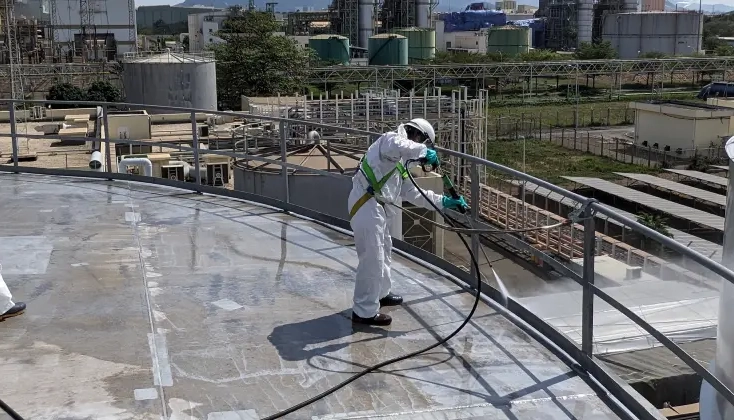
Surface preparationThe roof surface must be clean, dry, and free of contaminants. Remove dirt, debris, mold, mildew, oil, and any loose or deteriorated roofing material. Pressure washing is the standard preparation method for most substrates. Allow the surface to dry completely before coating application.
For metal roofs, address rust spots with appropriate surface prep (wire brush, sanding, or primer as needed). For BUR and modified bitumen, ensure no blisters, open seams, or ponding water areas exist. Repair any structural deficiencies before coating.
Surface preparation is the most overlooked step in roof coating projects and the most common cause of premature coating failure.
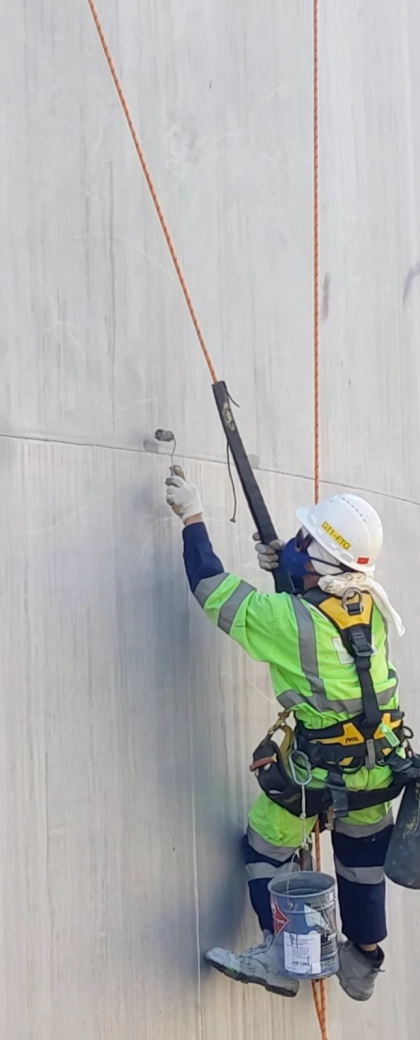
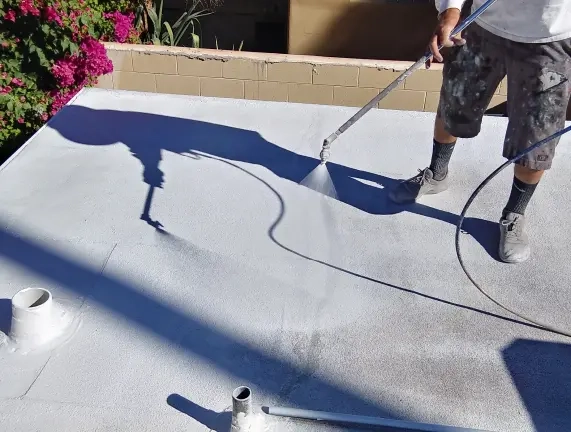
Application methodThe FlameOFF Cool Roof System is applied with an airless sprayer using a 0.017 or 0.019 tip at 2,000-3,000 PSI. For smaller areas or detail work, a 3/4-inch nap roller provides adequate coverage. Apply in even, overlapping passes to ensure uniform coverage.
Coverage and coat requirements| Specification | Value |
|---|---|
| Coverage rate | 160 sq ft per gallon at 15 wet mils per coat |
| Number of coats | 2 coats required |
| Total DFT | 20-30 mils (dry film thickness) |
| Recoat window | Within 60 minutes |
| Solids content | 65% by volume |
Two coats are required for rated performance. Apply the second coat within 60 minutes of the first coat. Allow proper drying between coats.
Weather and cure requirementsApply when ambient and surface temperatures are between 45 and 105 degrees Fahrenheit. Do not apply if rain is expected within 48 hours. The coating reaches touch-dry in approximately 30 minutes and accepts recoat within 60 minutes.
Schedule application during dry weather with moderate temperatures. Spring and early fall offer the best conditions in most climate zones. Avoid application during extreme heat, high humidity, or when dew point conditions may cause condensation on the roof surface.
What Should You Look for
When Choosing a Cool Roof Coating?
When Choosing a Cool Roof Coating?
Not all reflective roof coatings deliver the same performance. When selecting a commercial roof coating for your facility, focus on these measurable specifications rather than marketing claims.
Solar Reflectance Index (SRI). The single most important performance metric. Higher SRI means better solar heat rejection. Look for coatings with high SRI values — products with SRI above 82 are generally considered high-performance for low-slope commercial roofs.
Elongation. Measures the coating's ability to stretch without cracking as the roof expands and contracts through temperature cycles. Higher elongation values reduce the risk of cracking and premature failure, especially on metal roofs that experience significant thermal movement.
VOC content. Volatile organic compound levels matter for occupant health and regulatory requirements. Zero VOC formulations meet the strictest environmental standards including CARB 2020 and SCAQMD Rule 1113. The FlameOFF Cool Roof System has zero VOC content (0 g/L).
Warranty length. Industry-standard warranties range from five to seven years. A longer warranty indicates manufacturer confidence in product durability. The FlameOFF Cool Roof System carries a 10-year limited manufacturer's warranty, among the longest in the commercial reflective coating category.
Substrate compatibility. Verify that the coating is tested and approved for your specific roof type. A coating rated for metal may not perform the same on BUR or single-ply membranes.
Third-party testing. Insist on products with ASTM test data, CRRC ratings, and Energy Star roof coating certification. Manufacturer claims without third-party validation are not reliable for specification purposes.
Specification Comparison
| Specification | Industry Standard | FlameOFF Cool Roof System |
|---|---|---|
| VOC | 50-100 g/L typical | 0 g/L (zero VOC) |
| Solids content | 50-65% | 65% by volume |
| Warranty | 5-7 years | 10 years |
| Coats required | 2 | 2 (minimum 20 mils DFT) |
| Coverage | Varies | 160 sq ft/gal at 15 mils WFT per coat |
| Substrates | 2-3 types | Metal, concrete, composition roofs |
Frequently Asked Questions About Reflective Roof Coatings
A properly applied reflective roof coating lasts 10-20 years depending on product type, climate, and maintenance. Elastomeric acrylic coatings typically last 10-15 years, while silicone coatings can reach 15-20 years. The FlameOFF Cool Roof System carries a 10-year limited warranty.
Yes, reflective roof coatings can be applied over many existing commercial roof systems when the surface is clean, dry, structurally sound, and properly prepared.
Yes. Reflective coatings still reduce summer cooling loads and help protect the roof surface from UV exposure and thermal cycling, even in colder climate zones.
Maintenance typically includes periodic inspections, removing debris, cleaning the roof surface when needed, and repairing damaged areas before they spread.
Solar reflectance measures how much sunlight a surface reflects. SRI combines solar reflectance and thermal emittance into one performance rating.
The best time is during dry, mild weather when temperatures are within the product application range and rain is not expected during curing.
Yes. Some reflective elastomeric coatings can be applied to vertical concrete walls, exterior facades, and other compatible vertical substrates.
Cost depends on roof size, substrate condition, preparation requirements, coating type, and total dry film thickness required for the system.
Next Steps: Reduce Your Cooling Costs
with a Reflective Roof Coating
with a Reflective Roof Coating
A reflective roof coating is one of the highest-ROI energy efficiency upgrades available for commercial buildings. The combination of 20-30% cooling cost reduction, extended roof life, and reduced HVAC maintenance makes this a straightforward decision for building owners looking to lower operating costs.
The FlameOFF Cool Roof System delivers a highly reflective white finish with zero VOC (0 g/L), 65% solids by volume, and a 10-year warranty. It is compatible with metal, concrete, and composition roof systems, and can also be applied to vertical concrete surfaces for expanded energy savings.
Request a quote for your commercial roof coating project, or call (888) 901-5413 to speak with our technical team about product specifications, coverage calculations, and substrate compatibility.
For projects that also require structural fire protection, FlameOFF manufactures UL Classified intumescent coatings for steel, wood, and gypsum, as well as anti-corrosion coatings for rooftop HVAC equipment and structural steel exposed to weather.
View more articles